
Arrival Day Tips for Japan: What to Do Your First 24 Hours

Welcome to Tokyo! Your first day in Japan can be smooth and enjoyable when you know what to expect. Arrival day in Japan can feel a little magical—and a little intimidating. You’ve just landed in a country that runs on precision, unspoken rules, and systems that are wildly efficient. Once you understand them, everything falls into place.
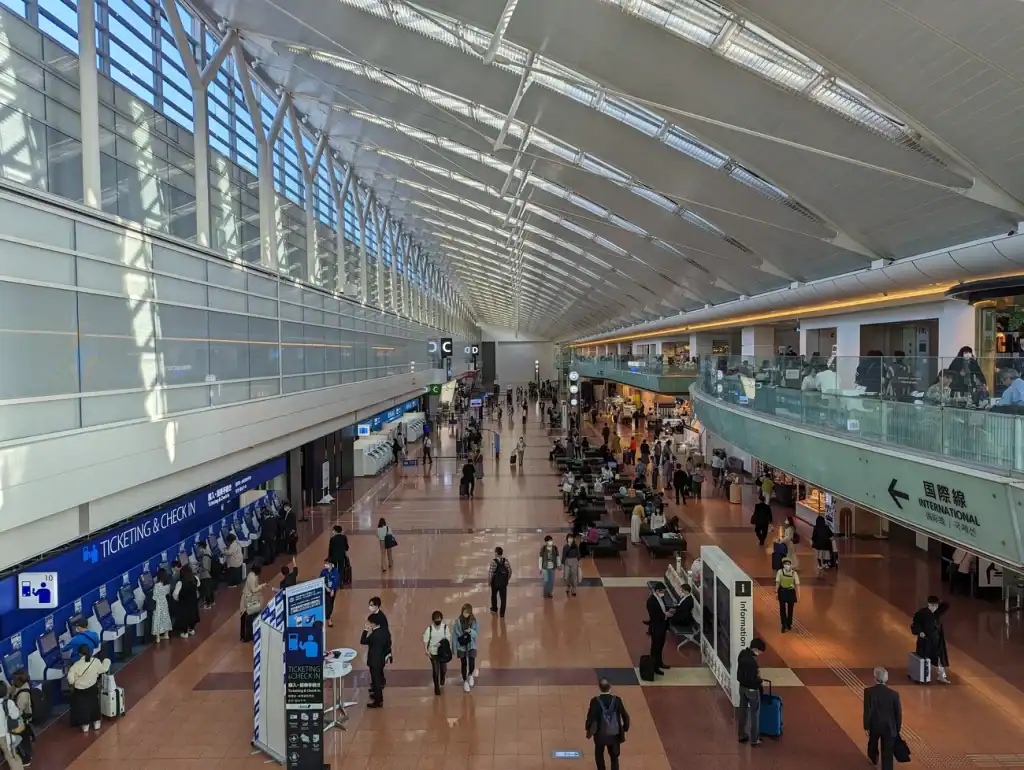
If it’s your first time, everything is new: the airport flow, the trains, the etiquette, and something as simple as paying for a meal. If you’ve just come off a long international flight, decision fatigue hits fast.
That’s why arrival day in Japan isn’t about doing everything. It’s about setting yourself up right so the rest of your trip feels smooth, calm, and enjoyable.
This complete guide walks you through everything from airport navigation to finding your hotel. You’ll find detailed video instructions that show exactly what to do after landing. We cover immigration steps, transport choices, first-day basics, and ways to make the most of your time in this amazing country – even when jet lag tries to mess up your plans.
These arrival day tips for Japan are written for first-time visitors who want a smooth, stress-free start to their trip.
What to Expect When You Land in Japan
Your Japanese adventure starts the moment you land at the airport. The atmosphere hits you right away. Everything runs with typical Japanese precision from the second you arrive.
Airport signage and language support
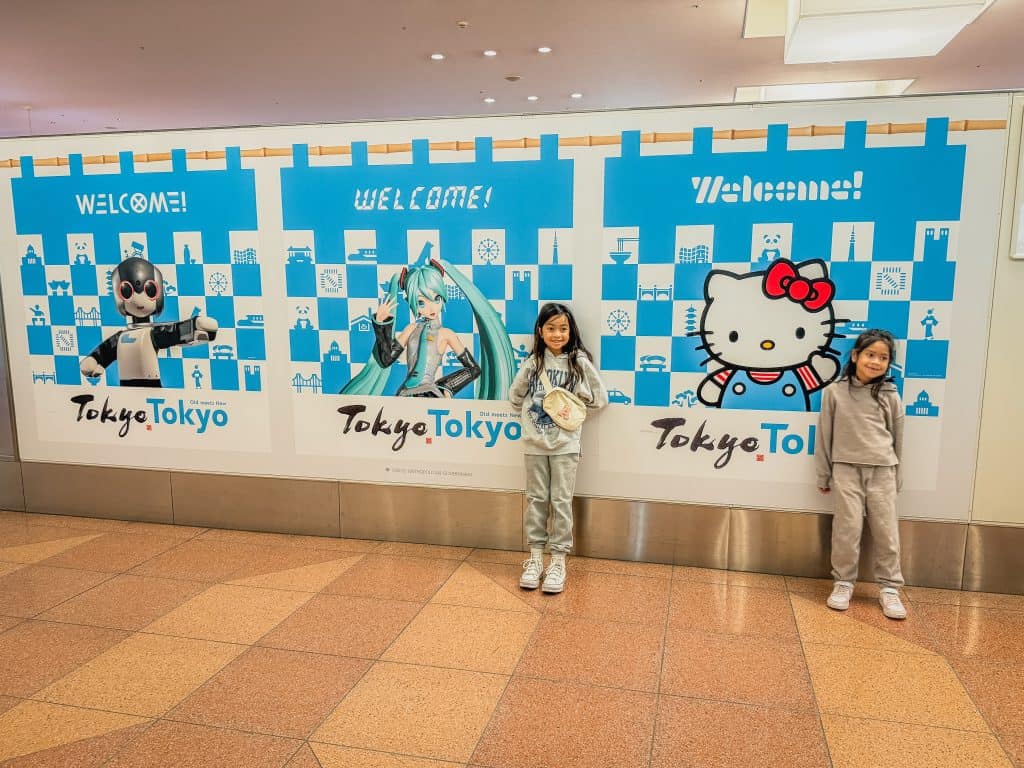
The terminal has detailed signage in multiple languages, including Japanese, English, Korean, and both simplified and traditional Chinese. Japan Airlines takes this support even further. Their service centers provide video remote interpreting services for travelers.
Before these breakthroughs, travelers who needed special communication help relied on email, fax, or handwritten notes. Now, they can communicate directly with airline staff using sign language. This makes the airport accessible to everyone.
Why Haneda is better than Narita (In my opinion)
Haneda Airport stands out as the smart choice for most travelers heading to Tokyo. Just 8.7 miles south of Tokyo Station, it rewards passengers with amazing city views during landing and offers quick trips into town.
Narita International Airport sits 43 miles from Tokyo Station. This distance makes a big difference in travel time. You can reach your hotel from Haneda in under 20 minutes if traffic flows well. The same trip from Narita takes over an hour.
The numbers tell the story: Haneda serves more than 78 million passengers yearly, while Narita handles over 30 million. In recent years, many major U.S. airlines have moved their operations to Haneda. Japanese carriers like All Nippon Airways and Japan Airlines have done the same.
Haneda also offers more domestic flight options, cheaper transport to the city, and twice as many limousine bus routes to Tokyo’s neighborhoods.
Download translation apps before arrival
Good translation apps are a great way to navigate language barriers in Japan. You will need help reading signs, product labels, pharmacy instructions, and restaurant menus. They also help with simple conversations with locals.
Google Translate will become your essential companion, especially with its camera feature. It shows English translations superimposed on Japanese text immediately, helping you decode signs, menus, and product labels throughout your trip.
Japanese Translator Offline works without internet access if you download language packs before you leave home. Papago serves as another solid choice for communicating with locals.
Google Translate is great for quick visual translations, but having multiple apps helps in different situations. Some apps excel at visual translation, and others for accurate text translation or conversation help. This way, you’ll never feel stuck due to language barriers in Japan.
Getting Through Immigration and Customs
Your next challenge starts after you clear the airport terminal: immigration and customs. Japan has updated its entry system, making the process quicker for international visitors.
Use Visit Japan Web for faster processing ((Do This Before You Fly)
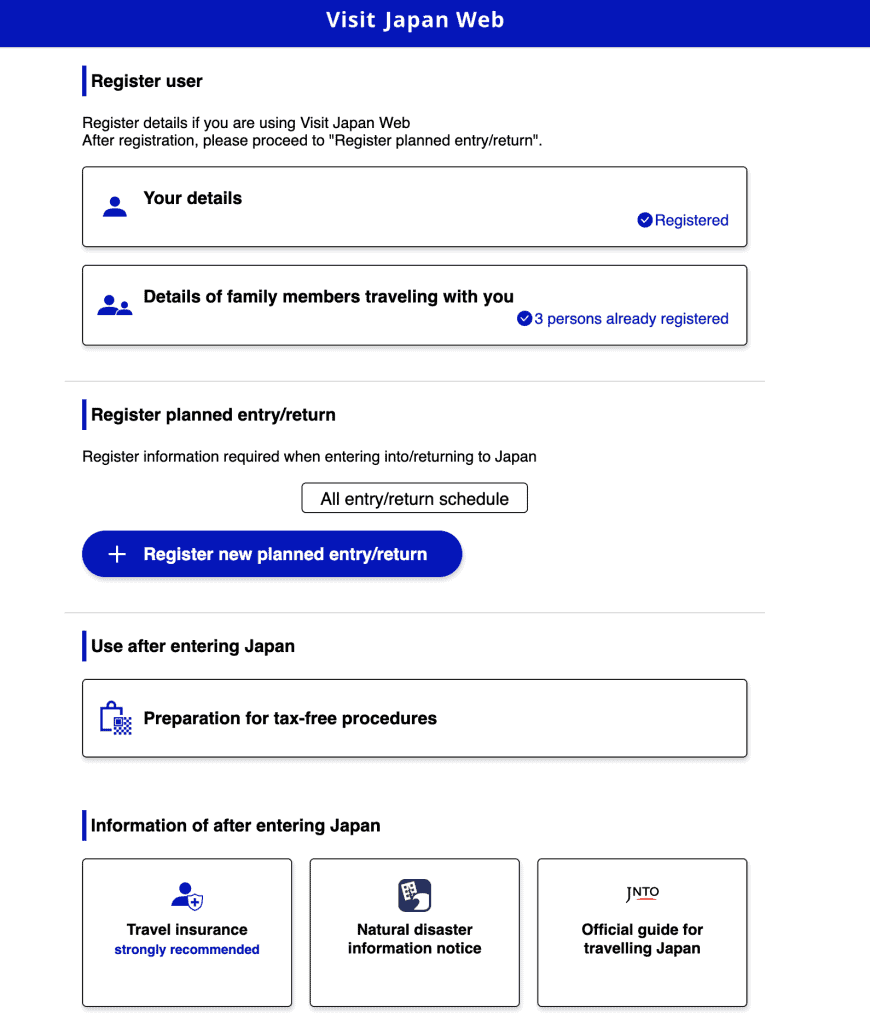
One of the biggest time savers for first-time visitors is completing Visit Japan Web before your trip. This official online platform was created by the Japanese government and significantly speeds up the immigration process.
Visit Japan Web has three main sections: immigration information, customs declaration, and tax-exemption registration. You only need about 15 minutes to complete everything. The process is straightforward. Register your travel details first, then fill out the immigration clearance form by selecting “Disembarkation Card for Foreigners” from the drop-down menu. The final step is your customs declaration, and each section provides a QR code that you’ll show upon arrival.
After you land:
- You’ll scan the QR code at immigration
- You’ll scan it again at customs after picking up your luggage
Instead of standing in longer lines or juggling paperwork while jetlagged, you simply scan and move forward. After a long international flight, this alone can make arrival feel dramatically easier.
Setting Up for Your First Day
You’ve made it through immigration and customs! Now, let’s set you up with everything you need to start your Japanese adventure.
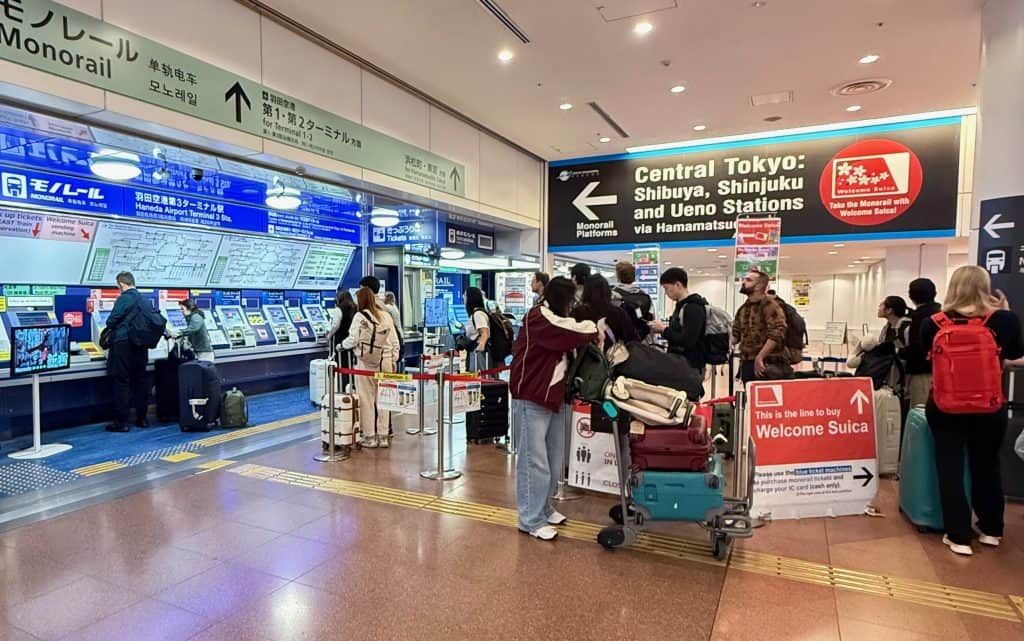
IC Card (Your Everyday Transportation & Payment Card)
Having an IC card ready makes navigating Japan feel intuitive rather than intimidating.
If you use an iPhone, you can load a digital IC card directly into your Apple Wallet. This is incredibly convenient—you don’t even need a physical card.
If you prefer a physical card, you can purchase a Suica card at the airport when you arrive. Both options work the same way—choose whichever feels easiest for you.
eSIM or Pocket Wi‑Fi (Non‑Negotiable on Day One)
Internet access in Japan is essential from the moment you land. Getting connected should be your first move.
Solo travelers will find eSIMs perfect for quick internet access without swapping physical cards. The process is simple: buy online, get a QR code by email, and scan to activate. The whole setup takes about 5 minutes.
Groups might want to consider pocket Wi-Fi instead. These handy devices let up to five people connect at once, providing speeds of 150 Mbps download and 25 Mbps upload on the 4G/LTE network. Book yours 2-3 days in advance, and pick it up at the airport or have it sent to your hotel.
Whether you choose an eSIM or a pocket Wi-Fi, having data allows you to navigate train stations with Google Maps, look up routes and platforms, translate signs and menus, and communicate easily if plans change.
- Navigate train stations with Google Maps
- Look up routes and platforms
- Translate signs and menus
- Communicate easily if plans change
Without internet, even simple tasks can feel stressful. However, with it, Japan becomes much easier to navigate.
Withdraw Yen from 7-11 ATMs
Even though Japan feels modern, cash is still widely used, especially at smaller restaurants, local shops, and in residential areas.
You don’t need to withdraw a large amount of cash at the airport itself. Instead, plan to withdraw yen from Seven Bank (7-Eleven) ATMs once you’re in the city. These are some of the most reliable ATMs in Japan for international travelers.
Seven Bank ATMs:
- Accept most international debit cards
- Are available 24/7
- Are located at convenience stores, major train stations, and over 28,000 locations nationwide
The withdrawal process is simple and traveler-friendly:
- Insert your card (magnetic stripe facing down)
- Select your language (English is available)
- Choose “Withdrawal,” enter your PIN, and select an amount
Most foreign cards allow withdrawals of up to 100,000 yen per transaction (magnetic-stripe cards may be limited to 30,000 yen). The screen clearly shows amounts in Japanese yen, so there’s no guesswork involved.
Handling cash this way keeps your arrival day stress-free. It ensures you’re prepared as soon as you start exploring.
Don’t Overplan Your Arrival Day in Japan
This is where many first-time travelers go wrong.
Even if you land early in the day, arrival day is not the day to tackle a packed itinerary. Between immigration, navigating transportation, checking in, and simply adjusting to a new time zone, your energy will be limited.
Instead of sightseeing across the city, plan just a few gentle activities:
- Getting to your hotel
- Exploring your immediate neighborhood
- Eating a relaxed dinner nearby
Japan rewards slow travel. Giving yourself permission to move at half speed on day one will make the rest of your trip far more enjoyable.
Finding Your Way to Your Accommodation
Your first impression of Japan might depend on how smoothly you get from the airport to your accommodation with all your luggage. This vital step can set the tone for your entire trip.
Train, Bus, or Private Transfer?
Japan’s train network provides one of the fastest and most affordable ways to reach your destination. English signs and navigation apps like Google Maps make the system easy to handle, even for first-time visitors. Here are your best options to start your Japan adventure:
- Trains: Fastest choice with regular departures, though big luggage can be tricky
- Airport limousine busses: Cost less than taxis and run every hour, reaching over 100 Tokyo locations
- Private transfers: Take you straight to your door

What to Do If You Arrive Before Check-In
Japanese hotels stick to strict check-in times, but most will gladly store your bags while you explore. Some places even let you use their lounges until your room is ready.
Jet lag hitting you hard after your flight? Here are some options:
- Book the previous night to get in right away
- Try a public bath (sento or onsen) to refresh
- Find hotels offering day-use rooms
Western chains like Hilton, Marriott, and Hyatt tend to be more flexible with early check-ins. Let the hotel know ahead of time if you’ll arrive early.
Western chains like Hilton, Marriott, and Hyatt tend to be more flexible with early check-ins. Let the hotel know ahead of time if you’ll arrive early.
Using Luggage Lockers or Delivery Services (TA-Q-BIN)
You’ll find coin lockers of different sizes at most stations and tourist spots, with prices between 300-600 yen. Popular locations fill up fast, so plan accordingly.
JAL ABC stores luggage for up to 30 days, which surpasses the usual 2-3 day coin locker limit. They charge by the calendar day, counting both drop-off and pick-up dates.
Luggage delivery services can move your bags between hotels or from convenience stores to your next stop. This smart system helps you enjoy your first day in Japan much more.
Making the Most of Your First Evening
Take a Short Walk and Explore Nearby
Your body clock needs movement on arrival day in Japan. A gentle stroll around your hotel’s neighborhood does wonders. You’ll soak up natural light, get some exercise, and start to know your surroundings. Tokyo’s Minato district’s quiet streets provide perfect spots to explore without pressure.
These peaceful walks allow you to see everyday Japanese life unfold naturally. You can snap photos, spot interesting details, and create mental markers that help you find your way later. This simple activity helps you stay alert while getting your first taste of Japanese culture.
No itinerary. No landmarks. Just notice your surroundings.
Eat Something Simple and Comforting
Arrival day is not the time to push your limits with food.
Japan has incredible cuisine, but when you’re tired, simple and familiar options are best. Ramen, udon, bento boxes, and rice dishes are filling and comforting.
Japanese convenience stores (konbini) will amaze you with their high-quality food selection, making other countries’ stores look basic. Each major chain has its specialties:
- 7-Eleven: “Nana Chiki” fried chicken and premium sandwiches
- FamilyMart: The beloved juicy “Famichiki” fried chicken
- Lawson: “Karaage-kun” bite-sized chicken with cute packaging
The stores stock steamed meat buns (nikuman), seasonal oden dishes, and triangular rice balls (onigiri) with different fillings. Budget-conscious travelers will love konbini food’s reasonable prices while tasting authentic flavors.
Adjusting to Jet Lag and Getting Rest
Here’s the golden rule after landing: stay awake until local bedtime. Your effort to push through tiredness leads to better sleep quality that night. Avoid blue light from work emails or social media before bed, as it can make jet lag worse.
Your 4 AM wake-up call the next morning? Don’t fight it! Early birds get special perks in Japan. Your sleep pattern should normalize within a few days, especially if you stick to natural daylight and local meal schedules.
Aim to stay awake until around 8–9 PM local time. It won’t be perfect, but this approach helps your body adjust faster and sets you up for a much better second day.
Ease Into Japanese Etiquette
You don’t need to know every rule on day one, but a few basics go a long way:
- Avoid talking on the phone and keep your voice low on public transit.
- Don’t eat while walking
- Learn the chopstick etiquette.
- Use the cash tray instead of handing money directly
- Carry a small plastic bag or ziploc with you to take your trash home with you.
- Follow local behavior when standing on escalators (it varies by city)
Respect, politeness, and consideration for others run deep in Japanese culture. People follow the rules whether they are explicitly stated or unspoken. When in doubt, observe those around you to see what most others are doing and follow along. Last but not least, Japanese people don’t expect foreigners to know everything, and they will appreciate any honest effort to respect their culture.
Conclusion
Landing in Japan can feel overwhelming at first, especially if it’s your first visit. But with a little preparation, arrival day becomes less about stress and more about stepping confidently into a new experience.
By planning ahead—completing Visit Japan Web, having internet access ready, knowing how you’ll get cash, and keeping your first day light—you give yourself the gift of ease. Instead of rushing from place to place, you create space to adjust, observe, and simply be present.
Your first day in Japan doesn’t need to be packed or impressive.
It just needs to be intentional.
Japan will still be there tomorrow—with its temples, trains, flavors, and quiet magic waiting for you. Let arrival day be about arriving—fully.
Ready to Keep Planning Your Japan Trip?
Arrival day is just the beginning. If this is your first time visiting, exploring a few more resources ahead of time can make your entire trip feel calmer and more intentional.
Read all of our Japan travel guides here for help with transportation, etiquette, itineraries, and family-friendly travel tips.